
An Open Letter to Parliamentarians in Europe: 96 Days and Counting
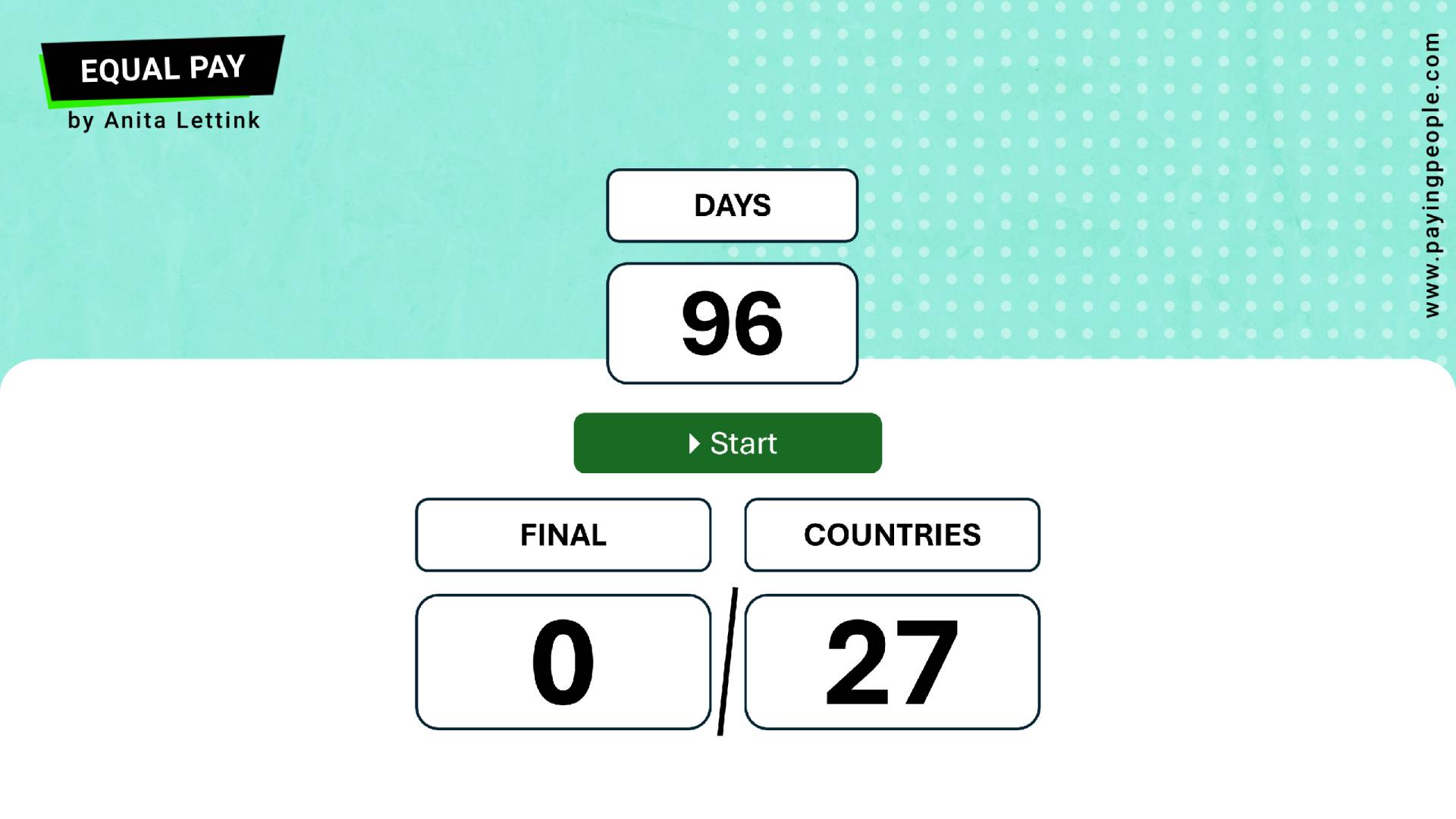
96 days. That’s all that separates employers across the EU from the legal deadline of the Pay Transparency Directive. And this law was signed nearly three(!) years ago.
So where do we stand? Three member states have finalized their national transpositions, though only partially. Nine have drafts in progress. And fifteen have done nothing at all.
Fifteen.
I genuinely don’t know what’s creating the delay. Is it political gridlock, competing priorities, or complexity when it comes to the details? But what I do know is this: the companies I work with are done waiting. They’re doing the hard work of building pay structures, auditing their data, and training their managers not just because the law requires it, but because they understand that pay transparency is more than a compliance exercise. It’s a trust issue. It’s become an employee expectation.
Which is why the legislative silence is so frustrating. Because while employers are doing their part, the unresolved policy questions are making implementation genuinely harder. So, since the clock is ticking, here are the five things that companies most urgently need clarified before June arrives.
- What exactly goes into compensation reporting? A defined list of pay components would be enormously helpful. A template report would be even better. Right now, companies are making judgment calls that may or may not hold up to scrutiny.
- Which benefits in kind are in scope, and how should their monetary value be calculated? In some roles, they can represent considerable compensation. Whether or not those count changes the picture significantly.
- This one keeps coming up in almost every conversation I have with compensation teams: how should organizations handle short and long-term incentives? Especially options and shares in private companies where there’s no public market price to reference. This isn’t a niche scenario. It’s relevant to thousands of scale-ups and mid-size businesses across the EU.
- The tension between pay transparency and data privacy needs to be resolved too. What happens when only two people hold the same role at the same level? Does GDPR override the Directive, or the other way around? The Netherlands has taken one approach. Other member states appear to be leaning in a different direction. Employers operating across borders cannot work with that ambiguity.
- When an employee submits an individual pay information request, what does a compliant response actually look like? Does a quarterly update satisfy the requirement? Again, it there a template format?
None of these are unreasonable asks. These are the basic implementation details that practitioners need to do this properly. The directive itself is sound. The intent behind it is right. But clarity in the transposition is what makes the difference between organizations actually getting there and organizations scrambling to show good-faith effort with incomplete information.
And here’s one more thing I’d like to share. Some of these questions will inevitably have country-specific answers. Benefits in kind vary too much across member states to expect a single European standard or template. But how you treat equity or the privacy-versus-transparency question? Those aren’t local issues. A company with employees in six EU countries shouldn’t have to navigate six different interpretations of how to report unvested options or handle a two-person team. These are exactly the kinds of questions where coordinated guidance at the European level would save thousands of employers an enormous amount of confusion.
I am calling on all the legislators: you still have a (short) window to work together across borders and align on the issues that don’t need to be complex at the local level. The Directive was a collective effort. The transposition doesn’t have to be a fragmented one.
There’s still time to get this right. Please use it.