
Why the Unadjusted Pay Gap Really Matters!
I hear it a little too often: “The unadjusted pay gap is meaningless because it doesn’t account for job roles, experience, or any legitimate factors. Let’s look at the adjusted pay gap instead.” And yes, technically that’s correct. But dismissing the unadjusted gap entirely is a mistake. Because it means you are ignoring real issues around hiring, promotion, and opportunity.
Let me be clear: the unadjusted pay gap tells a different story than the adjusted gap. And it’s not less important, it’s just a different one. To be compliant under the EU Pay Transparency Directive, you need to account for both.
What’s the unadjusted pay gap?
It’s a really simple measure: take the average (or median) pay for women, take the average (or median) pay for men, and then compare them. If women in your organization earn 85 cents for every euro men earn on average, that’s an unadjusted pay gap of 15%. You don’t use statistical controls, there are no adjustments for role or seniority: you just look at the amounts that people get paid.
The adjusted gap, by contrast, controls for factors like job level, experience, location, and performance (or whatever your company pays for). It compares apples to apples.
Why do people dismiss the unadjusted gap?
Because it’s easy to explain. “Of course, women earn less on average, they’re not in the senior roles!” or “We have more men in technical positions and those pay more.” These observations aren’t wrong, but they also explain the symptoms as if they are not the consequence of corporate behavior.
The unadjusted gap often gets dismissed as “not a real pay equity issue” because it doesn’t show discrimination at the individual level. But that completely misses the point of what it does show.
What does the unadjusted gap tell us?
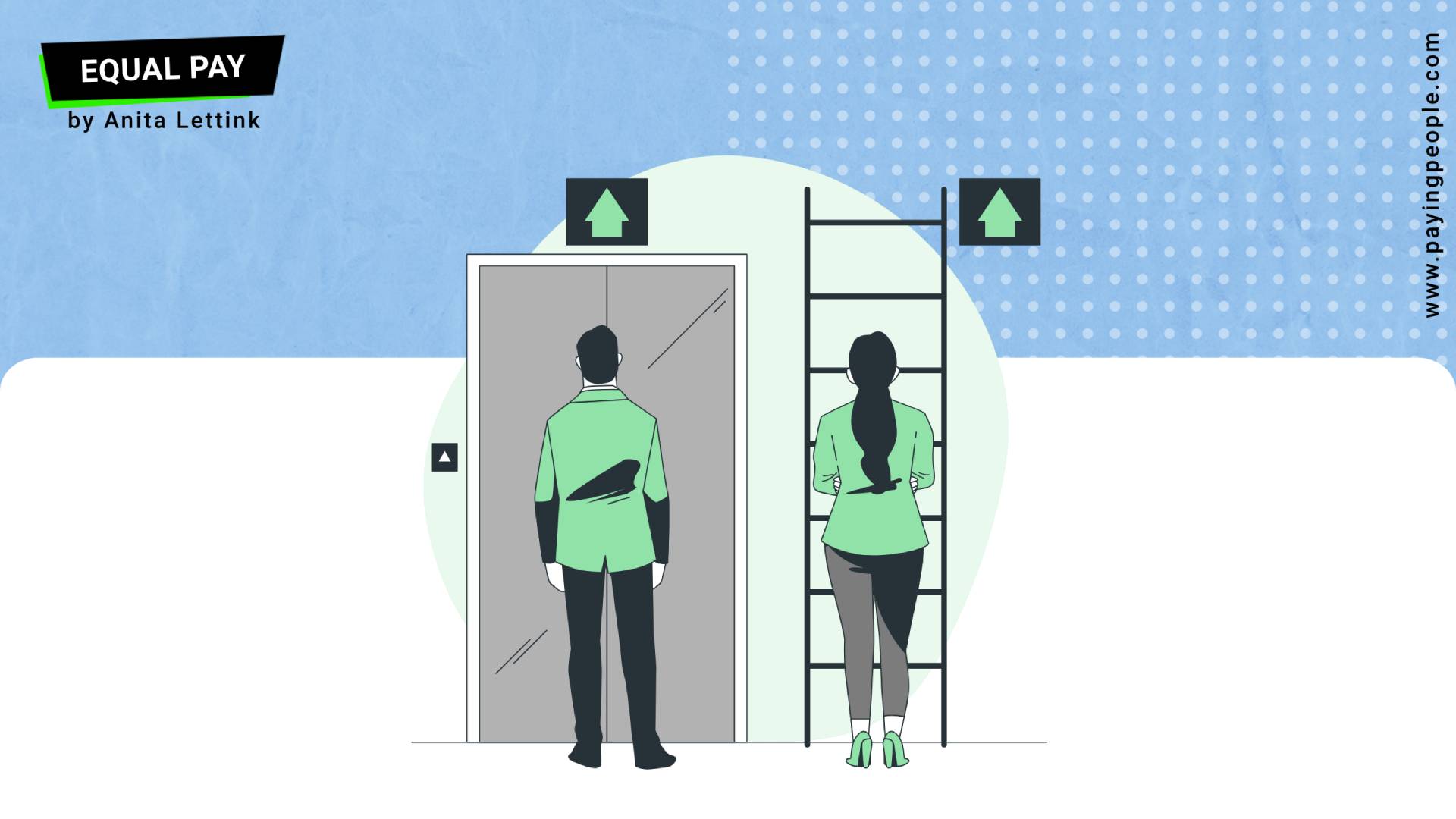
The unadjusted pay gap tells you something about opportunityin your organization. It reflects if people have equal access to your highest-paid roles, your leadership pipeline, your most lucrative career paths. A large unadjusted gap means that one group is systematically underrepresented in certain positions.
Think about it: if women make up 50% of your workforce but only 15% of your senior leadership, that’s going to create a large unadjusted gender pay gap. The question isn’t “is this pay discrimination?” The question is “why aren’t women advancing into these roles?”
Can you give a concrete example?
Sure. Let’s say your adjusted pay gap is 2%. That’s basically negligible and within the limits of the EU Pay Transparency Directive. Women and men in equivalent roles are paid fairly. You’ve done well.
But suppose your unadjusted pay gap is 15%. That tells you women hold lower-paying roles and are largely absent from senior positions. Maybe your hiring practices favor men for technical roles. Maybe your promotion criteria inadvertently screen out women. Maybe your leadership development programs aren’t reaching female employees. The adjusted gap won’t flag any of this, but the unadjusted gap shows there is a problem. And while I am using female employees in this example, note that this isn’t restricted to gender.
Doesn’t the EU Pay Transparency Directive focus on adjusted gaps?
Yes. Article 9 requires action when there’s a pay gap of 5% or more that “is not justified on the basis of objective, gender-neutral criteria.”
But the Directive also requires reporting on the representation of women and men in each quartile pay band (Article 9.2). Why? Because the regulators understand that pay equity isn’t just about equal pay for equal work. It’s also about equal access to higher-paying work. The unadjusted gap and quartile analysis work together to tell that story.
So how should I use the unadjusted gender pay gap?
You should use it as a diagnostic tool for systemic issues:
- Hiring: Are you bringing women in at lower levels than men with equivalent experience? Are certain roles or departments predominantly one gender?
- Promotion: Are women advancing at the same rate as men? Are there invisible barriers at certain career levels?
- Retention: Are you losing women at higher rates in senior positions? Are your high-potential female employees leaving?
- Job architecture: Are roles predominantly held by women systematically valued and compensated lower than roles predominantly held by men?
The unadjusted gap points you toward these questions. The answers determine your action plan.
What’s the bottom line?
You should stop treating the unadjusted pay gap like it’s a simple number to be explained away by pointing at the adjusted pay gap. Because the number tells you something about people practices in your organization. And those practices, like who gets hired where, who gets promoted when, who has access to what, are precisely the things you should be examining.
The unadjusted gap can signal opportunity inequality. You should take it seriously and create an action plan to address it.